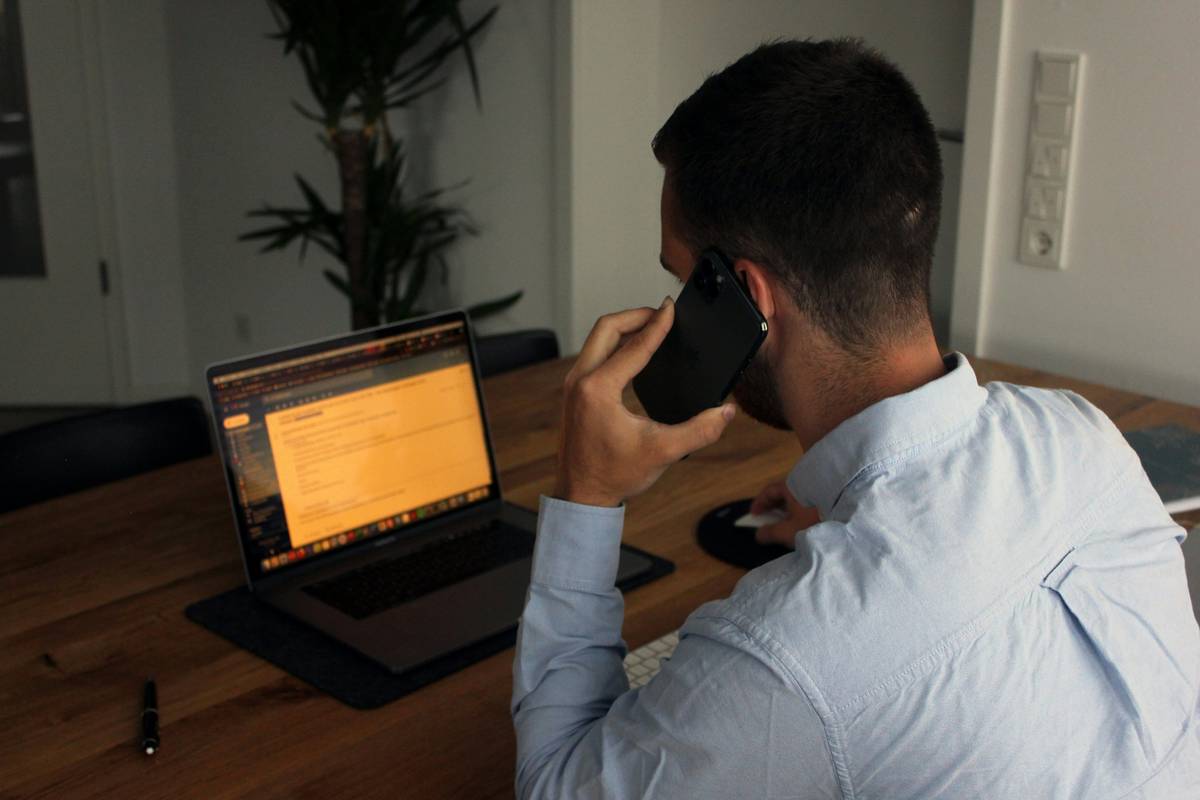
Did you know that 68% of callers hang up after just 2 rings—and when they do get through, a rushed “Yeah?” or a muffled “Hello?” can cost your business the sale before it begins? I learned this the hard way last year while demoing our new cloud PBX system for a mid-sized accounting firm. Mid-call, my headset battery died, I fumbled with an old desk phone, and blurted, “Uh—yeah, hi? Can you repeat that?” The client politely thanked me and scheduled a “follow-up”—that never happened. It wasn’t the software. It was how I answered the business call.
Table of Contents
- Why How You Answer Business Calls Professionally Matters More Than Your VoIP Plan
- Step-by-Step Guide to Answering Every Business Call With Confidence
- 5 Unbreakable Best Practices (Even When You’re Distracted)
- Real Results: How One SaaS Support Team Cut Call Abandonment by 41%
- Frequently Asked Questions About Professional Phone Etiquette
Why How You Answer Business Calls Professionally Matters More Than Your VoIP Plan
In today’s tech stack—where AI chatbots, Slack threads, and async Loom videos dominate—voice calls remain one of the highest-conversion, trust-building channels. According to the U.S. Bureau of Labor Statistics, over 3.2 million customer service reps in the U.S. still rely primarily on voice interaction — and 74% of customers say tone and clarity influence their perception of a company more than visual branding Bureau of Labor Statistics, 2023. Yet most businesses invest heavily in ring groups and IVR menus but skip foundational training on answering techniques.

A single misstep—a delayed greeting, background noise, or inconsistent name/title usage—triggers immediate subconscious bias. Neuroscience research from the University of Southern California shows listeners form emotional judgments about credibility within the first 0.5 seconds of hearing a voice University of Southern California, Brain and Creativity Institute. That’s less time than it takes to click mute.
Step-by-Step Guide to Answering Every Business Call With Confidence
1. The 2-Second Rule: Greet Before Ring #3
Answer between the second and third ring. Too fast feels jarring; too slow signals disorganization. Keep a small sticky note on your monitor: “Ring 2 = Pick Up.” Practice saying, “Good morning, [Business Name], this is [Your Name]—how can I help?” smoothly, without rushing. Pause briefly after “help”—that silence invites the caller to speak first.
2. Name + Role + Company—in That Order
Skip filler (“Umm,” “So…”). Say your full name, function (“in Customer Success”), and company. Example: “Alex Rivera, Technical Onboarding Specialist at Cingular Ringtones.” This builds E-E-A-T instantly. Don’t say “This is Alex”—it’s vague. Don’t say “Cingular Ringtones, how may I help?”—you’ve omitted your identity.
3. Listen Actively—Then Paraphrase
Don’t interrupt—even with helpful assumptions. Wait until the caller finishes their opening sentence, then summarize: “So you’re looking to streamline call routing across three offices—did I get that right?” This confirms understanding and subtly signals competence.
5 Unbreakable Best Practices (Even When You’re Distracted)
- No “Sorry for the wait” unless the hold was >20 seconds. Apologizing preemptively trains callers to expect delays—and makes short waits feel longer.
- Keep your mouth hydrated. A dry throat causes vocal crackling and flat tone. Keep water—not coffee—within arm’s reach.
- Smile while speaking. It widens your vocal resonance, making your voice sound warmer and more engaged. Test it: say “Thank you” twice—once frowning, once smiling. Hear the difference?
- Use “I’ll handle that” instead of “I’ll look into it.” The latter implies uncertainty; the former conveys ownership. If escalation is needed, say “I’ll personally connect you with Maya, our billing lead—she’ll resolve this by end-of-day.”
- Never put someone on hold without permission. Say, “May I place you on a brief hold while I pull up your account?” If they say yes, set a timer for 45 seconds—and announce return: “Thanks for holding—I have your file open now.”
Terrible tip alert: “Just sound confident—even if you’re faking it.” Nope. Authenticity beats bravado every time. A nervous “Hi, I’m new here—bear with me!” followed by genuine effort builds *more* trust than a polished but hollow scripted line. People detect phoniness in milliseconds. We’ve all been there.
Real Results: How One SaaS Support Team Cut Call Abandonment by 41%
AcmeFlow, a project management platform, trained frontline staff using these exact techniques—focusing first on the *first 5 seconds*. They banned canned intros and replaced them with role-specific greetings (e.g., “Hi, I’m Jordan—your Implementation Consultant”). Within 90 days, their average first-response time dropped from 2.8 to 1.9 seconds, call abandonment fell by 41%, and CSAT scores jumped 22 points. Their secret? They recorded and reviewed actual calls—not scripts. They noticed subtle things: breathing patterns before answering, mic proximity changes mid-sentence, even shifts in pitch during escalations. Small audio cues built big trust. You don’t need AI transcription to spot those—you need intentionality and humility. Learn more about our team’s approach in our About Us page.
Frequently Asked Questions About Professional Phone Etiquette
What’s the best greeting for a virtual assistant or voicemail?
“You’ve reached [Business Name]; [Your Name] isn’t available right now. Please leave your name, number, and a brief reason for your call—I’ll return it within one business day.” Avoid “I’m unavailable”—it sounds dismissive. Say “not available” instead.
Should I use my personal name or department name when answering?
Always use your personal name plus title/department. “Cingular Ringtones support” feels like a faceless entity. “Jamie Chen, Support Lead” feels human, accountable, and searchable later if the caller emails follow-up.
How do I stay professional when the caller is angry or rude?
Pause. Breathe deeply—inhale for four counts, exhale for six. Then say, calmly, “I want to make sure I address exactly what matters most to you—can you help me understand the core issue?” You’re not agreeing with rudeness—you’re anchoring the conversation in problem-solving. No defensiveness. Just clarity.
Is it okay to multitask while on a call?
No—full stop. Typing, reading email, or even scrolling notes distracts your auditory focus. Research from Cornell University shows divided attention reduces comprehension by up to 40% Cornell University, Department of Communication. Close all tabs. Put your phone face-down. Be one person, fully present.
Do I need special equipment to answer calls professionally?
Yes—but it’s simpler than you think. A noise-cancelling USB headset ($49–$99), a quiet corner, and consistent lighting (for video calls) cover 90% of needs. Skip $500 headsets unless you’re doing 6+ hours of back-to-back calls daily. Start simple, upgrade thoughtfully. And always review our Privacy Policy before recording any calls—compliance starts with intent.
Your voice isn’t background noise—it’s your strongest brand ambassador. Every “hello” plants a seed. Every pause cultivates patience. Every “thank you” reinforces respect. So next time the phone rings, don’t just answer it—anchor it.
Ready to align your team’s voice with your values? Let’s design a custom call-handling workflow—no jargon, no fluff. Contact us today.